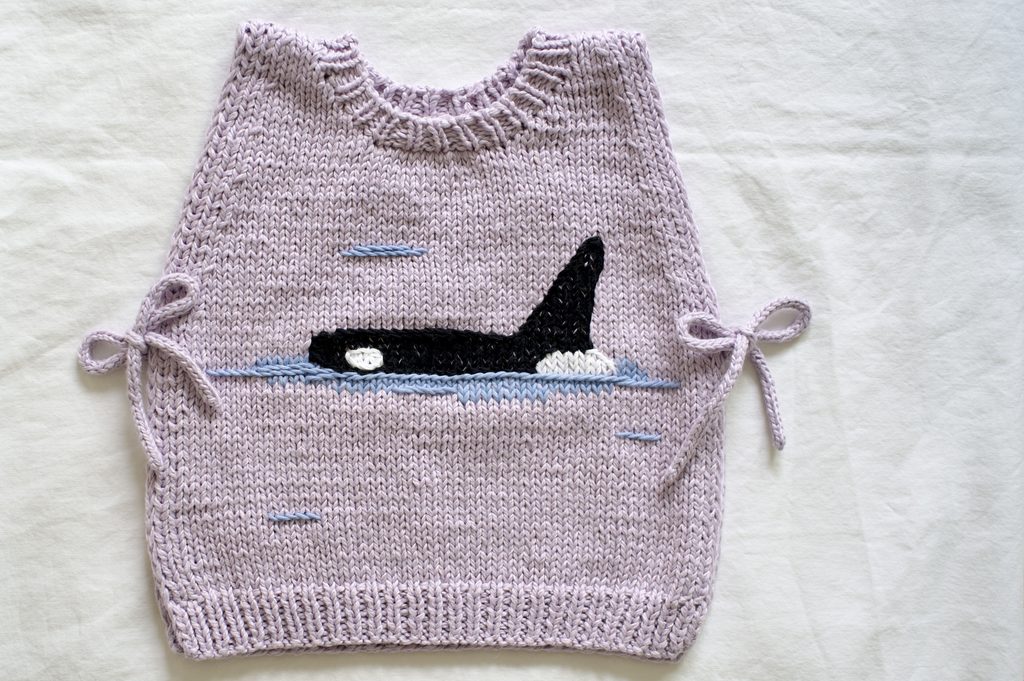
Laurel the Killer Whale
shared by Alyssa Corrigan
I’m not entirely sure where my love of orcas began.
Maybe it was seeing Shamu at SeaWorld when I was three years old (I know – not great, but I was a toddler). Maybe it was growing up in the 90s and watching Free Willy on repeat. Or maybe it was an obscure episode of The Little Mermaid television series where Ariel befriends an orca named Spot. Whatever started it, my fascination never faded. Learning about orcas became one of my favorite hobbies, and for as long as I can remember, seeing them in the wild sat near the top of my bucket list.
Over the years, I’ve been on several whale-watching tours. I’ve seen incredible marine wildlife and spent countless hours scanning the water for a spout or dorsal fin, but the orcas always remained elusive.
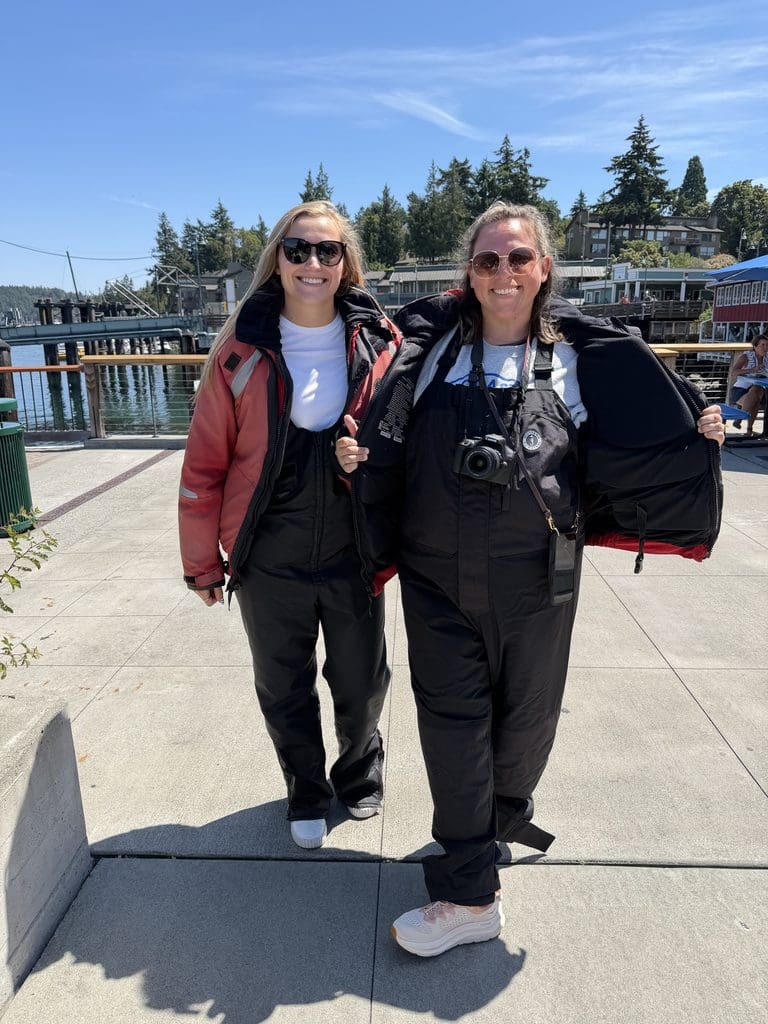
Then, in the summer of 2026, I traveled to Washington’s San Juan Islands with two close friends. We booked a tour with San Juan Safaris, led by an exceptional captain and naturalist whose knowledge and enthusiasm made the experience memorable before we had even spotted a whale.
About twenty minutes into the tour, everything changed.
We noticed a pod close to shore almost immediately because of one unmistakable feature: the enormous dorsal fin of Laurel (T101A). Even from a distance, it stood out against the landscape. As we watched, three members of the T100 pod surfaced together: Hutchins (T100), Laurel, and Estrella (T101B).
It was unreal.
For years, these whales had existed for me in photographs, documentaries, articles, instagram reels, and research reports. Suddenly they were real. Not on a screen or in a book, but moving through the water…. right in front of us.
One of the most fascinating things we learned during the tour involved Estrella. At the time, researchers had not yet determined the whale’s gender. Because male and female orcas can look remarkably similar when they are young, researchers often have to wait until adolescence, typically somewhere between ages twelve and sixteen, when the dorsal fins of males begin to dramatically lengthen and “sprout.” Since our encounter, Estrella has breached in a way that allowed researchers to confirm he is male. That means Hutchins is actually traveling with two sons, Laurel and Estrella, a detail that somehow makes the story feel even more personal to me.
What struck me most that day wasn’t their size, although they are breathtakingly large animals. It was how deeply they belonged to that place. Watching them move through the Salish Sea felt less like observing wildlife and more like witnessing something ancient and enduring. The islands, the water, and the whales all seemed connected in a way that reminded me how small I am within the natural world.
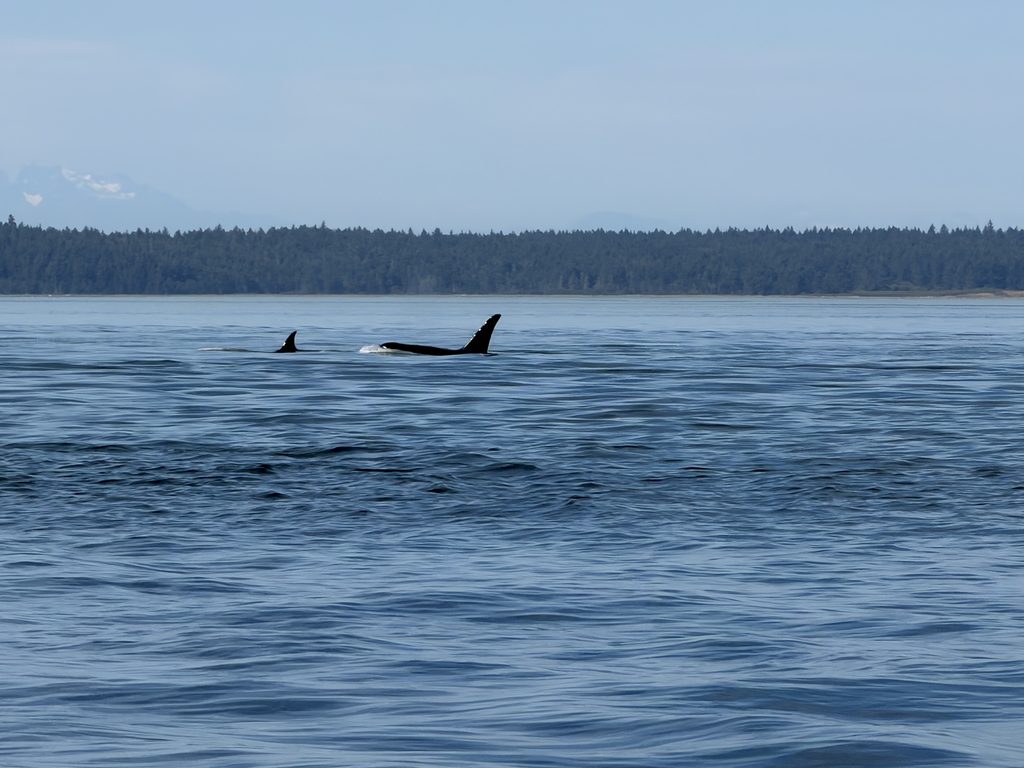
The encounter lasted only a short time, but it left a lasting impression. The memory remains vivid: the excitement of recognizing Laurel’s dorsal fin, the collective awe on the boat, and the realization that after years of hoping, I was finally seeing wild orcas with my own eyes.
Experiences like this also remind me of our responsibility as visitors in their world. One of the things I appreciated most about our tour was the respect shown toward the whales. Responsible whale watching means following local regulations, maintaining safe distances, reducing noise and disturbance, and allowing these animals to carry on their lives naturally. The goal should never be to get as close as possible. The goal should be to witness these incredible animals while ensuring our presence has as little impact on them as possible.
For a few unforgettable moments in the San Juan Islands, the whales I’d spent a lifetime admiring surfaced into reality. And that’s a memory I’ll carry with me forever. I can’t wait to go back.