Sungold The Pigeon
shared by Natalie Lee
Earlier this summer, I traveled to Madrid to participate in a two-week graduate course titled Artistic Activism and Education in Third Spaces. I was drawn to the course because I believe that informal gathering places, beyond the boundaries of home and work, hold enormous potential. Specifically, I believe third spaces create unique opportunities for cultivating meaningful relationships, sharing knowledge, and strengthening communities.
Because of this potential, I am interested in how these spaces might help us recognize and strengthen our relationships with more-than-human animals and the living world around us.

With this is mind, I was eager to learn how community organizations, nonprofits, artists, museums, storytellers, educators, and others in Madrid were using third spaces to create change within their communities. Over the course of the program, we met with many remarkable people who shared their work with us and invited us to participate in it. During these visits, I tried to approach each experience from a multispecies perspective, hoping to develop new ways of thinking about community engagement, artistic activism, and the relationships that shape the places we share.
One of the most meaningful parts of these experiences for me was our exploration of concepts such as voice, agency, and cultural rights. These were ideas I had already been considering in relation to more-than-human animals, so I immediately began making connections. At first, I understood these connections as largely parallel. Perhaps shared concerns around voice, agency, dignity, and belonging could help create forms of solidarity across species.
I still believe there is value in this and that it matters to ask what conditions allow different beings to express themselves, exercise agency, and participate in the communities to which they belong. But as the course progressed, I began to recognize the limitations of thinking about human and more-than-human experiences solely as parallel.
The language of parallels can unintentionally preserve the idea that humans and other animals are separate entities whose lives simply unfold beside one another. But our lives are not merely adjacent. They are entangled.
This realization began to shift my understanding of multispecies communities, particularly the stories we tell about them, the ways we describe them, and how we perceive them. I realized that, in order to educate in ways that embrace our multispecies communities, we also need new narratives about history, place, and belonging.
History is often told through a human lens, or through separate stories of humans and animals unfolding alongside one another. In reality, our histories are shaped by countless shared relationships across species, including encounters, dependencies, conflicts, acts of care, and forms of coexistence. And yet, the stories of other animals are often left out.
In Madrid, this became more than a theoretical realization when my path crossed with a pigeon as I walked through a park after class. I noticed a pigeon lying alone in the middle of a walkway. While the other pigeons scattered as people passed, she remained still. When I approached, I realized she was injured.
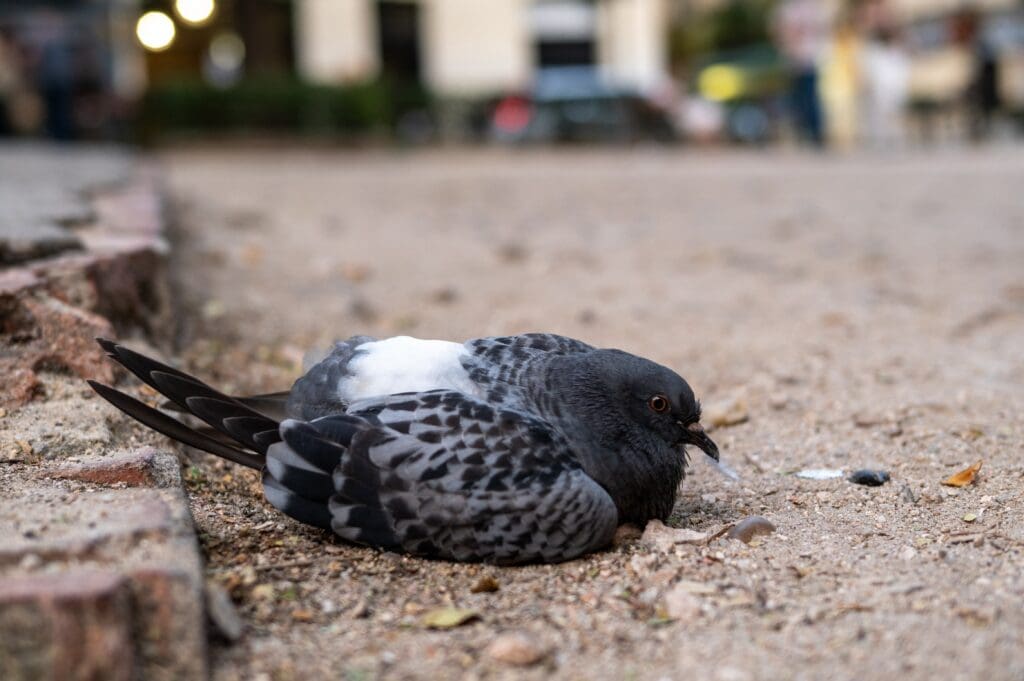
I had no idea what to do next, so I sat beside the pigeon on the path and searched for answers on my phone. Fortunately, two other people stopped to help. Together, we called veterinary clinics, trying to find someone who would take in an injured pigeon.
In the process, I learned that pigeons in Madrid are often regarded as pests, and many clinics were unwilling to treat her. In some cases, euthanasia was the only option offered. It was also late in the day, and our options were quickly narrowing.
Finally, we found a 24-hour veterinary clinic, Vetcon, that agreed to see her. We found a small yellow kiwi box at a nearby grocery store, and because of the box that carried her, we named her Sungold.
Using my jacket, I gently picked her up, put her into the box, and carried her across the city in a taxi. Somehow, Sungold and I managed to keep her presence hidden from the driver.
At the clinic, I learned that Sungold had trichomoniasis, a contagious parasitic disease. She was severely underweight and malnourished, and the weakness caused by her illness had likely contributed to her fractured leg. The veterinary team began treating her with antibiotics and scheduled surgery to repair the fracture. The surgery, however, was only the beginning. Sungold would need approximately 21 days of recovery before she could be released.
Since I was staying in a dormitory and spending most days in class, keeping Sungold in a small box in a building full of unfamiliar people did not seem like the best option. But three weeks of veterinary care would be expensive, so I began looking for alternatives. I contacted local pigeon rescue organizations and found, through Facebook, a remarkable community of people who saw pigeons not as nuisances, but as individuals worthy of care.
At the time, Madrid was experiencing a severe heat wave, and rescue networks were overwhelmed. Although people responded with kindness, no one was able to take Sungold. My choices were limited to sneaking her into the dormitory or finding a way to pay for her care.
When I spoke with my professors, they encouraged me to seek help from members of our program. They felt that caring for Sungold was relevant to what we had been learning and discussing throughout the course and could even be a way to put community activism and education into practice.
So, I shared Sungold’s story with my classmates, and what happened next became one of the most moving parts of my experience in Madrid. The professors and many students offered to sponsor a night of her veterinary care. Encouraged by this response, I asked my husband in New York to help me create a GoFundMe campaign to help cover her medical expenses.
Later that day, I returned to my computer, ready to launch the fundraiser. Before doing so, I checked my email for an update from the clinic. Sungold had undergone surgery that day. The operation itself had been successful, but she experienced periods of instability under anesthesia and struggled to recover afterward. Despite the veterinary team’s efforts, she died.
I was devastated. I had been so excited to visit Sungold that evening and see that she was okay. I had imagined spending time with her during the remainder of my time in Madrid, getting to know her personality. I wanted to discover what seeds she liked, how she responded to people, what made her Sungold. Most of all, I wanted the ending I had imagined for her. After recovering, she would fly away and rejoin her community. Unfortunately, we did not get that ending.
Still, I went to the clinic that evening to say goodbye. The veterinary staff had wrapped Sungold in a colorful blanket and placed her gently in a basket. They gave me a private room where I could sit with her.
I had worried that wanting to say goodbye to a pigeon I had known for such a short time might seem excessive or silly. Instead, I was met with extraordinary compassion. The staff treated my grief as real and understandable. Their care for Sungold did not end when treatment was no longer possible; it extended to those who had tried to help her, too.
When I left the room and entered the waiting area, I noticed several other women bringing pigeons into the clinic. One of them saw that I was upset and gave me a long hug. We began talking, and she explained that she had also brought in a pigeon she had rescued. We have remained in contact since I left Madrid, and she has continued to send me updates. I am happy to share that the pigeon has now fully recovered.
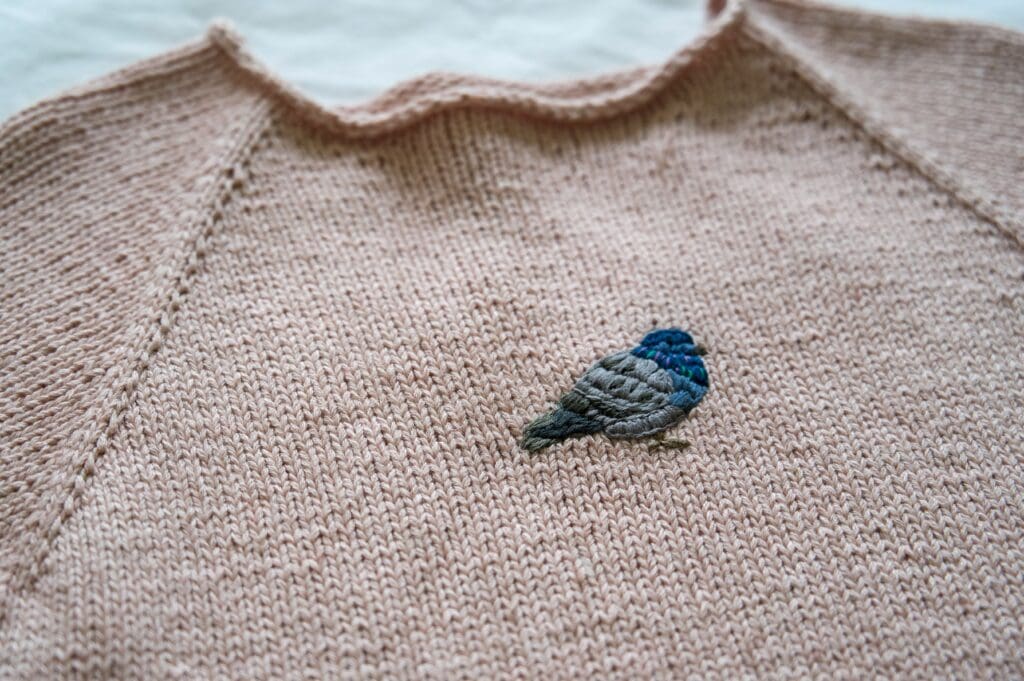
Sungold’s story did not have the ending I had hoped for, and losing her was heartbreaking. Still, I am grateful that she did not suffer alone in the middle of a busy park. In her final hours, she was surrounded by people who cared for her: the strangers who stopped to help, the veterinary staff who treated her, classmates who offered to contribute to her care, members of the pigeon-rescue community, my husband helping from another country, and the woman at the clinic whose own act of rescue connected us.
This experience reminded me that compassion does not have to be measured by outcome. Sometimes the most meaningful thing we can do is show up, offer kindness, and make sure another living being is not alone.
Sungold also taught me so much. By connecting all of us, she showed me what multispecies communities and histories can look like and how beautiful they can be. She helped me understand that community does not always emerge through formal structures, institutional programs, or intentional planning. Sometimes, it is already there, waiting to become visible through a seemingly small decision that brings together individuals who might otherwise never have met, creating a temporary but meaningful network of care.
Her story also changed the way many of my classmates think about pigeons. Perhaps Sungold became an unexpected form of artistic activism herself—not because she intentionally created a work of art or organized a movement, but because her life changed how a group of people saw the world around them.
We notice pigeons now. We wonder about them. We think about what they need.
Students from the program still send me photographs of pigeons they encounter, along with other animals they notice in their everyday lives. The pigeon has become a kind of symbol of our time together, with our professors even suggesting that the group create a pigeon stencil in Sungold’s honor and incorporate it into a street-art project around the city.
To me, this is one of the most important lessons of activism and multispecies education: transformation can begin with learning to notice what we have previously overlooked. Attention is not enough on its own, but it can be a beginning. It can interrupt assumptions, make room for curiosity, and create the conditions for care.
I now understand that creating a multispecies space requires more than simply making room for the perspectives of other animals. It requires recognizing that human communities have never existed apart from the more-than-human world. Our histories, environments, and daily lives have always been entangled.
I went to Madrid hoping to learn how third spaces could help create multispecies communities. Instead, Sungold taught me that the community was already there.
